
EbnetPIVC (not approved for commercial distribution)
A Peripheral Intravenous Catheter (PIVC) is a catheter which is inserted into a peripheral, superficial vein. Most typical locations are hand and forearm.
Vascular access is life-saving, with billions of catheters being used per year in a growing market.
Nearly 80% (1) of patients receive a PIVC during their hospitalization. In general, it is used for:
- administration of fluids and medications
- administration of blood products
- diagnostic purposes, such as administration of contrast
Numerous studies describe very high complication rates with tremendous additional costs.
Up to 69% of common (peripheral) venous catheters fail (2). Premature removal of common venous catheters leads to conservatively estimated additional costs of 1.5 billion US dollars per year in the US alone (3). In up to 54% of children, the vein is not successfully accessed on the first attempt (4).
Expected Improvements
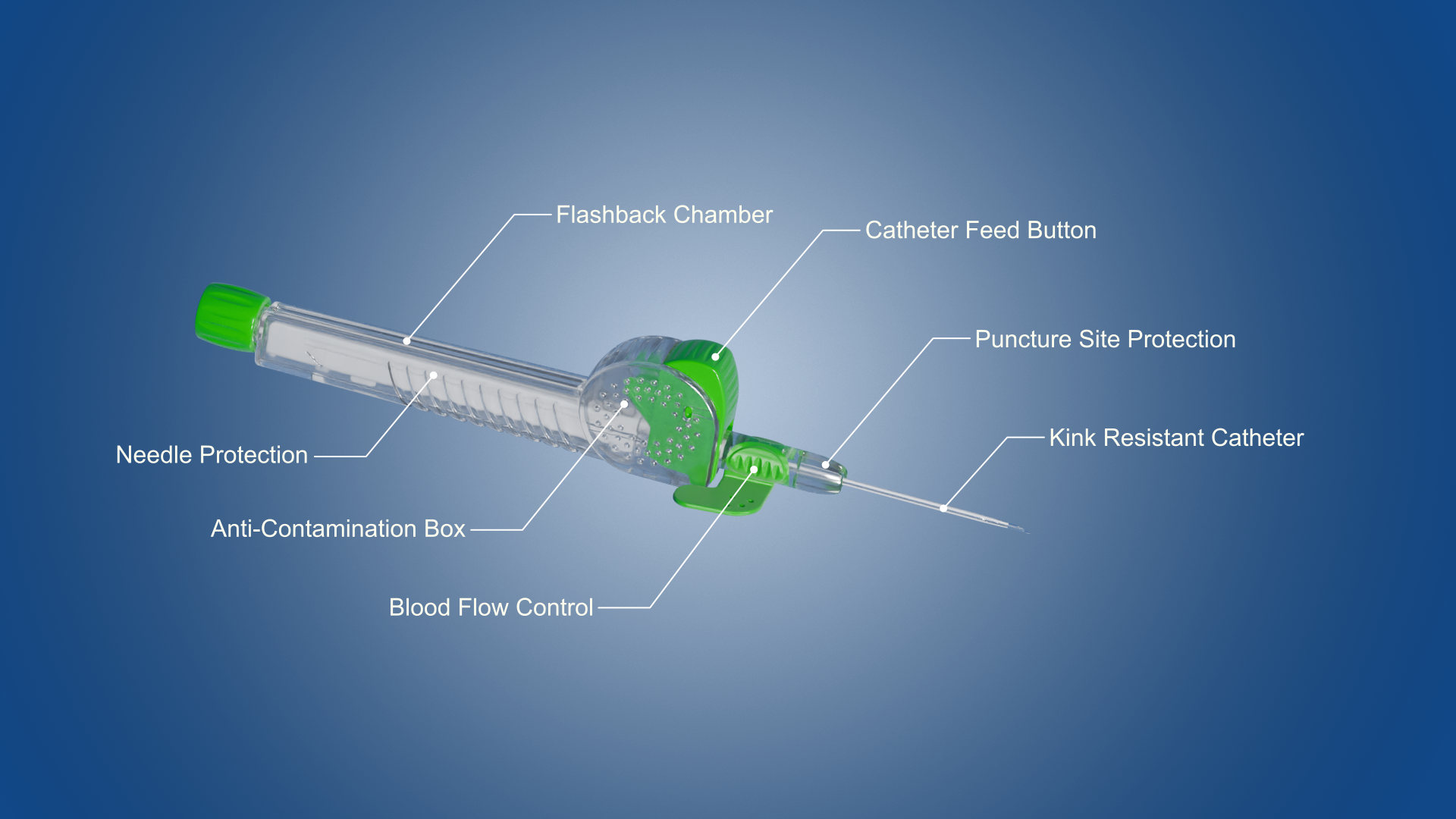
- Clear design for competitive manufacturability
- Intuitive handling for minimal training
- Stable handling and anticontamination box
- One-handed operation for use with ultrasound
- Manual flow control to avoid blood exposure
- Catheter kink protection for secured infusion flow
- Optimization of usual workflows for rapid adoption
- Needle safety mechanism shielding entire needle
(not approved for commercial distribution)
The objective is to demonstrate a positive correlation between the technical features of the system and measurably improved patient outcomes.
Method
Schematic representation of the method; preparation, disinfection not shown; not approved for use in patients.
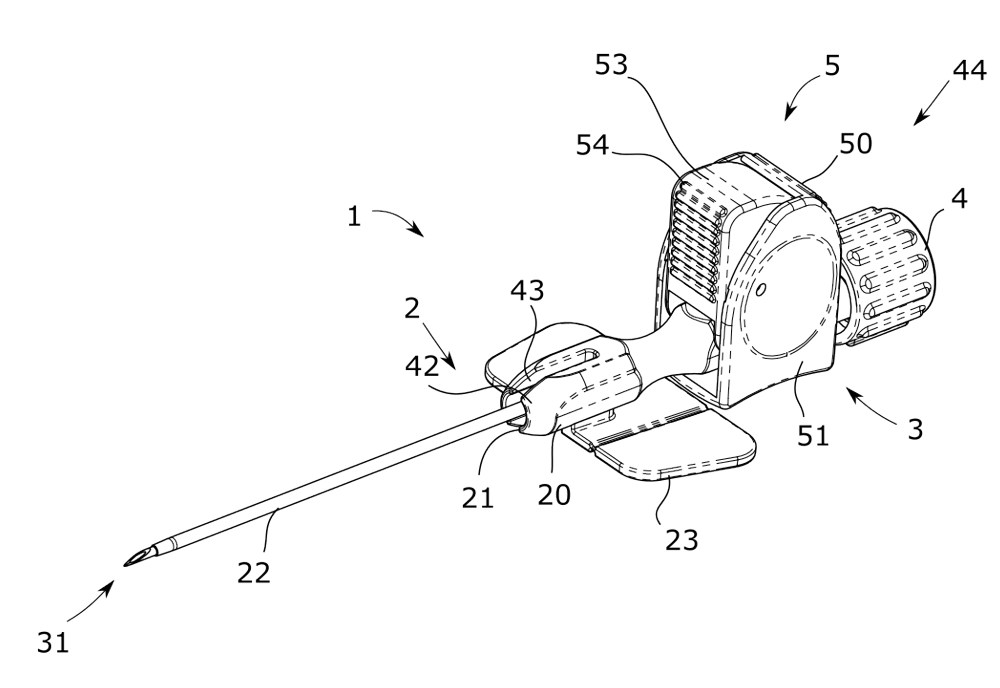
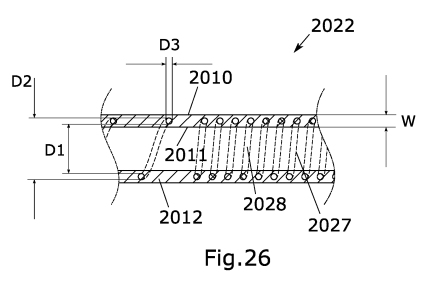
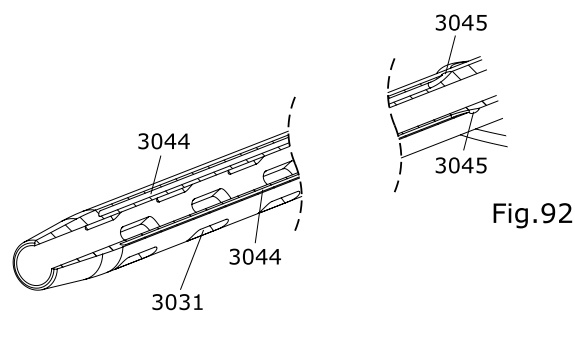
Extensive Intellectual Property Portfolio
20 2018 101 646.6 (Germany, utility protection model)
DE 10 2021 115 847 A1 (Germany, pending)
PCT/EP2019/057097 (international patent application)
PCT/EP2020/087404 (international patent application)
PCT/EP2022/066380 (international patent application)
PCT/EP2024/081180 (international patent application)
19713743.3 (EU, pending)
20842219.6 (EU, pending)
17/040,342 (US, pending)
17/786,835 (US, pending)
201980028955.9 (China, pending)
202080095919.7 (China, pending)
202037041537 (India, granted)
2020-550830 (Japan, pending)
Additional intellectual property filed (not yet published, options for numerous national/regional applications)
References
- Kaphan K, Auypornsakul S, Somno J, Wongwattananan W, Jamsittikul K, Baicha W,Somsri S, Sawatrak T. The Prevalence and Associated Factors of Peripheral IntravenousComplications in a Thai Hospital. J Infus Nurs. 2024 Mar-Apr 01;47(2):120-131. doi:10.1097/NAN.0000000000000538. PMID: 38422405; PMCID: PMC10916754.(14.02.2026; 12:00)
- Observational Study of Peripheral Intravenous Catheter Outcomes in Adult Hospitalized Patients: A Multivariable Analysis of Peripheral Intravenous Catheter Failure – Marsh – 2018 – Journal of Hospital Medicine – Wiley Online Library;
https://shmpublications.onlinelibrary.wiley.com/doi/10.12788/jhm.2867 - Improving Nurses’ Peripheral Intravenous Catheter Insertion Knowledge, Confidence, and Skills Using a Simulation-Based Blended Learning Program – PMC (nih.gov);
https://pmc.ncbi.nlm.nih.gov/articles/PMC5345884/ - Failed attempts and improvement strategies in peripheral intravenous catheterization – PubMed (nih.gov)
https://pubmed.ncbi.nlm.nih.gov/23442240/
EbnetPIVC
(not approved for commercial distribution)
A Peripheral Intravenous Catheter (PIVC) is a catheter which is inserted into a peripheral, superficial vein. Most typical locations are hand and forearm.
Vascular access is life-saving, with billions of catheters being used per year in a growing market.
Nearly 80% (1) of patients receive a PIVC during their hospitalization. In general, it is used for:
- administration of fluids and medications
- administration of blood products
- diagnostic purposes, such as administration of contrast
Numerous studies describe very high complication rates with tremendous additional costs.
Up to 69% of common (peripheral) venous catheters fail (2). Premature removal of common venous catheters leads to conservatively estimated additional costs of 1.5 billion US dollars per year in the US alone (3). In up to 54% of children, the vein is not successfully accessed on the first attempt (4).
Expected Improvements
- Clear design for competitive manufacturability
- Intuitive handling for minimal training
- Stable handling and anticontamination box
- One-handed operation for use with ultrasound
- Manual flow control to avoid blood exposure
- Catheter kink protection for secured infusion flow
- Optimization of usual workflows for rapid adoption
- Needle safety mechanism shielding entire needle
The EbnetPIVC is being designed as a platform technology for various medical applications and is currently under development. The product is not approved for commercial distribution.
(not approved for commercial distribution)
The objective is to demonstrate a positive correlation between the technical features of the system and measurably improved patient outcomes.
Method
Schematic representation of the method; preparation, disinfection not shown; not approved for use in patients.
Extensive Intellectual Property Portfolio
20 2018 101 646.6 (Germany, utility protection model)
DE 10 2021 115 847 A1 (Germany, pending)
PCT/EP2019/057097 (international patent application)
PCT/EP2020/087404 (international patent application)
PCT/EP2022/066380 (international patent application)
PCT/EP2024/081180 (international patent application)
19713743.3 (EU, pending)
20842219.6 (EU, pending)
17/040,342 (US, pending)
17/786,835 (US, pending)
201980028955.9 (China, pending)
202080095919.7 (China, pending)
202037041537 (India, granted)
2020-550830 (Japan, pending)
Additional intellectual property filed (not yet published, options for numerous national/regional applications)
References
- Kaphan K, Auypornsakul S, Somno J, Wongwattananan W, Jamsittikul K, Baicha W,Somsri S, Sawatrak T. The Prevalence and Associated Factors of Peripheral IntravenousComplications in a Thai Hospital. J Infus Nurs. 2024 Mar-Apr 01;47(2):120-131. doi:10.1097/NAN.0000000000000538. PMID: 38422405; PMCID: PMC10916754.(14.02.2026; 12:00)
- Observational Study of Peripheral Intravenous Catheter Outcomes in Adult Hospitalized Patients: A Multivariable Analysis of Peripheral Intravenous Catheter Failure – Marsh – 2018 – Journal of Hospital Medicine – Wiley Online Library;
https://shmpublications.onlinelibrary.wiley.com/doi/10.12788/jhm.2867 - Improving Nurses’ Peripheral Intravenous Catheter Insertion Knowledge, Confidence, and Skills Using a Simulation-Based Blended Learning Program – PMC (nih.gov);
https://pmc.ncbi.nlm.nih.gov/articles/PMC5345884/ - Failed attempts and improvement strategies in peripheral intravenous catheterization – PubMed (nih.gov)
https://pubmed.ncbi.nlm.nih.gov/23442240/